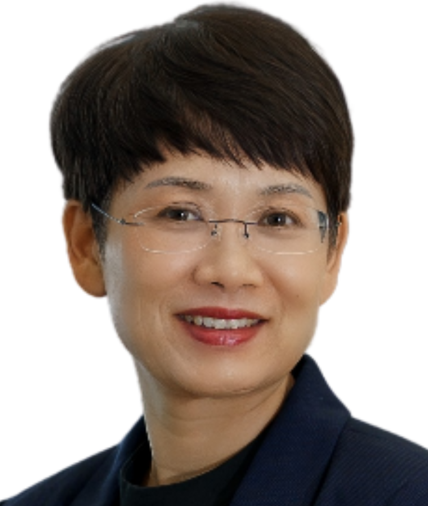
Dr. Sumei Sun, A*STAR
Title: Pervasive Sensing and Connectivity for Real-Time and Embodied Intelligence: Powering the Next Frontier of Maritime and Aviation Transformation
Abstract: Digitalization, decarbonization, intelligence, automation, and autonomy are driving the transformation of maritime and aviation transportation. Achieving these goals requires high-fidelity, real-time situational awareness to enhance navigation safety, operational efficiency, and emission-aware decision-making in complex maritime and aviation environments. Pervasive connectivity with integrated 5G and emerging 6G terrestrial and non-terrestrial networks (TN-NTN), network-native AI and sensing, are poised to enable real-time connected and embodied intelligence for reliable maritime and aviation operations in congested ports, coastal waters, airport, airspace, and beyond-line-of-sight environments.
This presentation will highlight how maritime AI and aviation AI is advancing next-generation traffic management and improving operational efficiency while supporting decarbonization. It will underscore the importance of high-fidelity spatial-temporal data streams for high-performance AI models and outline a roadmap for integrated 6G TN-NTN communications, network-native AI and sensing as key enablers of connected real-time and embodied intelligence. The talk will conclude with emerging opportunities and research directions for resilient, intelligent, and sustainable maritime and aviation ecosystems.
Bio: Dr. Sumei Sun is A*STAR's Coordinating Executive Director for Hub of the Future (HOTF), which drives frontier AI, autonomous and digital technologies research and innovation in aviation, maritime, land transportation, and resilient supply chains. She holds a joint appointment with the Singapore Institute of Technology, and an adjunct appointment with the National University of Singapore, both as a full professor.
With strong passion in industry-relevant research and technology creation, Sumei has authored and co-authored more than 400 technical papers. She is the inventor/co-inventor of over thirty patented technologies, with most of them licensed to industry. She is a Fellow of the Academy of Engineering Singapore (SAEng), Fellow of the IEEE, AI Industry Alliance (AIIA), and Asia-Pacific AI Association (AAIA). Sumei's current research interests include next-generation communications, sensing-communications-computing-control integrative design, applied AI, and next-generation transportation systems. She is recipient of the IEEE ComSoc Donald W. McLellan Meritorious Service Award 2024, IEEE ComSoc Inaugural Asia Pacific Women in Communications Engineering Outstanding Achievement Award (2024), 2023 IEEE VTS Women's Distinguished Career Award, and Singapore National Day 2022 Public Administration Medal (Bronze).
Professor Yiannis Demiris, Imperial College London
Title: Personal Assistive Robotics
Web page: https://profiles.imperial.ac.uk/y.demiris
Lab: www.imperial.ac.uk/Personal-Robotics
Abstract: While robotics continues to advance rapidly, close interaction with humans presents both significant challenges and profound opportunities. Genuine collaboration requires robots to accurately perceive human states, model and anticipate behaviors, and generate human-aware actions. Addressing these challenges is vital for developing robots that can assist with activities of daily living (ADL) and serve as capable industrial partners. From smart mobility to bimanual dressing assistance, a fundamental multidisciplinary goal is ensuring assistance is delivered in a human-acceptable manner, incorporating user comfort, trust, and privacy as critical optimization criteria alongside robot-oriented performance metrics. This talk outlines recent research at Imperial College London's Personal Robotics Lab on utilizing multimodal sensing and user modeling to dynamically adapt robotic behaviour and levels of assistance across diverse tasks, including mobility, dressing, eating, cooking, bathing, and ergonomic handovers. I will discuss ongoing challenges in assistive scenarios, including the manipulation of deformable objects like clothing, and the instantiation of theoretical concepts like trust within human-robot interaction experiments.
Bio: Yiannis Demiris is a Professor of Human-centred Robotics at Imperial College London, where he also holds the Royal Academy of Engineering (RAEng) Chair in Emerging Technologies (CiET). He graduated with a BSc and a PhD in Intelligent Robotics from the University of Edinburgh, has been a visiting scholar at Harvard, and AIST in Japan. He is the director of the Personal Robotics Laboratory of the Department of Electrical and Electronic Engineering, and the Head of the Intelligent Systems group, comprising 11 faculty members and approximately 80 researchers and graduate students. He specialises in human-robot interaction, and in particular robot perception of human states, human-in-the-loop learning and personalisation, and adaptive human-robot collaboration; he has published more than 280 refereed papers in these topics. He has graduated 35 PhD students and supervised 25 postdoctoral researchers over his 25 years at Imperial. Alumni of his lab are now professors at prestigious universities (Imperial, King's College, UCL, Birmingham, National University of Singapore, Queensland University of Technology, Jilin University, among others), as well as researchers in prominent technological companies including Apple, Google DeepMind, Sony, Honda, Spotify, Toyota, among others. He has received the President's award for Excellence in Research Supervision, and the Faculty of Engineering Award for Excellence in Engineering Education. He is a Fellow of the Institution of Engineering and Technology (FIET), and the British Computer Society (FBCS).
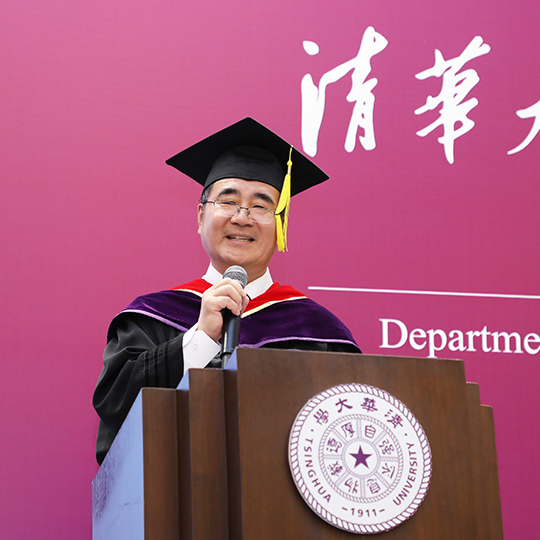
Fuchun Sun, Tsinghua University
Fuchun Sun is a professor in the Department of Computer Science and Technology, Tsinghua University, and the deputy director of the State Key Laboratory of Intelligent Technology and Systems (Tsinghua University), a Fellow of the Chinese Association of Automation, a Fellow of the Chinese Association for Artificial Intelligence, a Fellow of the Institute of Electrical and Electronics Engineers. Sun Fuchun's main research areas include Intelligent Control, Navigation and Control of Robots and Aircraft, Network Control Systems, and Information Perception and Processing of Artificial Cognitive Systems.